
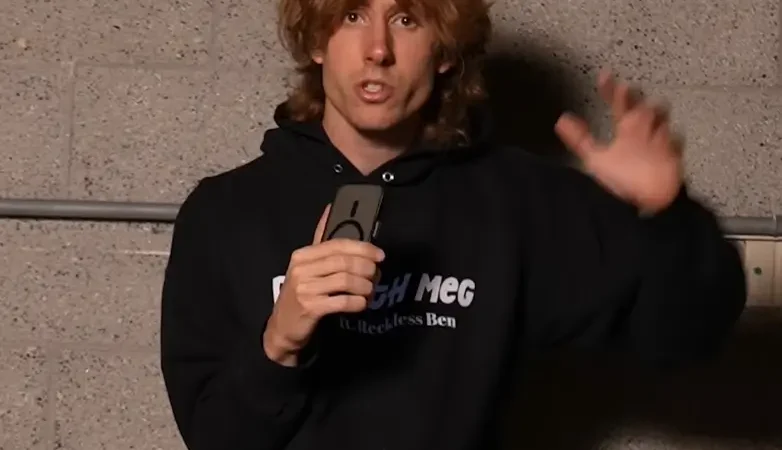
Lately, a massive scandal has been rocking the LEGO community regarding Bricks & Minifigs (BAM). The independent retail franchise has found itself in incredibly hot water over the alleged mishandling of a consigned LEGO Star Wars collection promoted to be worth $200,000.
YouTuber Ben “Reckless Ben” Schneider has been front and center of the drama, documenting the entire saga in a documentary series that has recently been put on hold due to intense legal battles and an alleged gag order.
One of the largest mysteries remaining in this debacle is why The LEGO Group has not officially addressed it. Despite heavy pushback from the community trying to force a corporate response, the only public acknowledgement has come from customer service representatives responding to comments left by fans on LEGO.com.
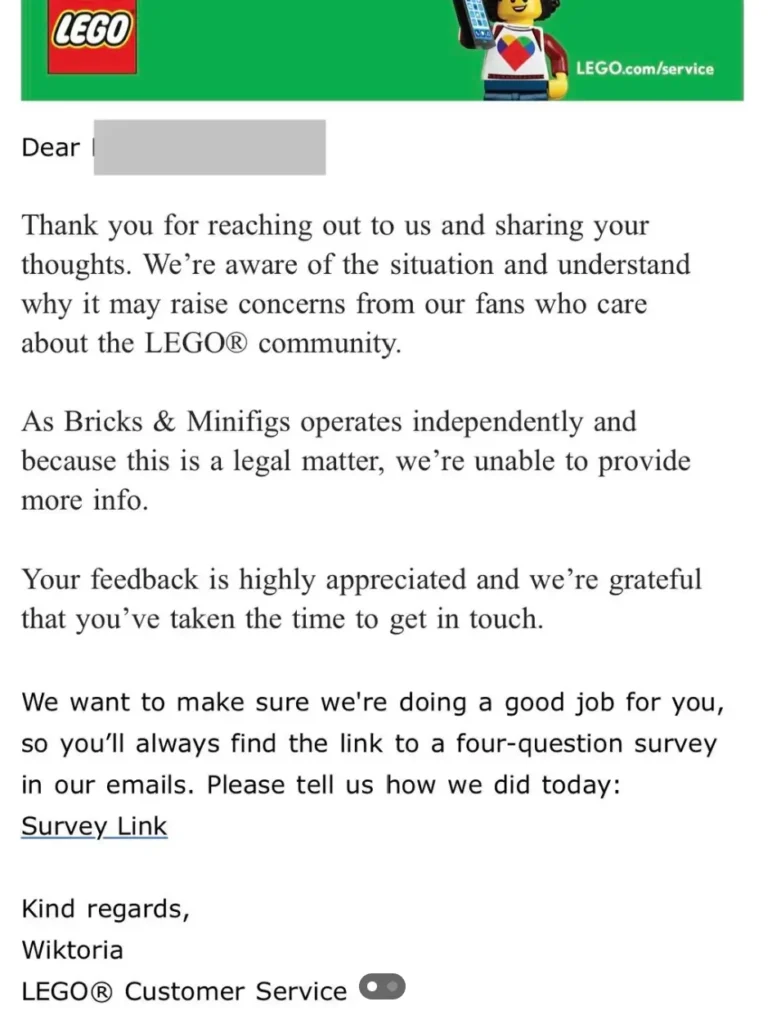
With the community demanding answers, let’s look at the most likely reasons why LEGO is staying silent, alongside a few fan theories that don’t quite hold water.
Why is Lego staying silent?
The primary factor behind LEGO’s silence boils down to pure brand management. LEGO is widely regarded as one of the most reputable and pristine companies on earth. In fact, according to the 2026 Global RepTrak® 100 annual rankings, The LEGO Group was officially recognized as the number one most reputable company in the world for the fourth consecutive year.

The general public rarely associates LEGO with legal or ethical controversy. Because BAM is a completely separate, independently owned franchise network, LEGO has absolutely nothing to gain by inserting itself into the narrative.
Issuing a corporate statement would only invite mainstream global news coverage, tethering LEGO’s name to a messy legal scandal. Furthermore, if LEGO speaks out prematurely and BAM ultimately wins its legal battles, LEGO could open themselves up to massive defamation lawsuits. For corporate legal teams, the play here is simple: don’t touch it.
LEGO’s corporate legal team is almost certainly waiting for the active lawsuits and RICO counter-suits to completely play out in court. Because this mess involves multiple parties, former and current franchisees, and a complex web of civil litigation, the legal process could easily drag on for years.
If and when a final verdict is reached, that is when we might see a calculated statement. If the courts definitively rule against BAM, LEGO could quietly use it as grounds to strip them of their “Authorized Lego Resale store” status which is a highly coveted title that is incredibly difficult to obtain, the loss of which would financially devastate BAM’s corporate standing.

Beyond the legal fallout, there is also the sheer, astronomical difference in financial scale to consider. To put it bluntly, BAM is tiny compared to LEGO. Estimates place BAM’s corporate worth somewhere in the $200 million to $400 million range, putting them far down the list of valuable U.S. companies.
While those numbers are impressive for a niche toy franchise, they are a drop in the bucket compared to LEGO, which pulled in 83,530 mDKK or $13 billion USD in revenue during the 2025 fiscal year.
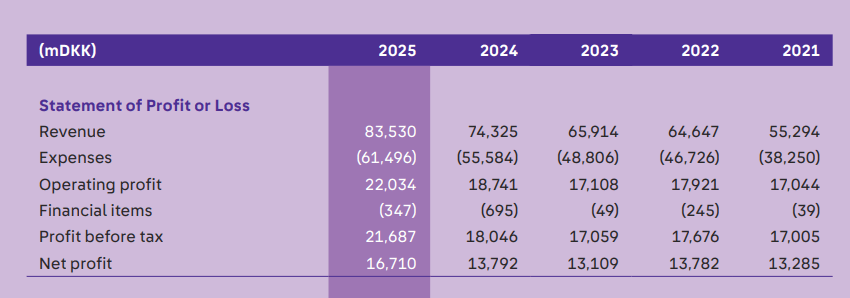
Mathematically, LEGO brings in more revenue in just three days than BAM makes in an entire fiscal year. From a cold, corporate standpoint, a company that massive is simply not going to risk its global brand equity to intervene in a dispute involving a mid-sized reseller.
Debunking fan theories online
“LEGO is staying quiet because they want to buy out BAM?” A seemingly growing theory circulating online suggests that LEGO is keeping the peace because they secretly want to acquire BAM to expand their physical storefront footprint.
While it sounds intriguing, this theory completely falls apart when you look at corporate business models. LEGO explicitly owns and operates all of its official corporate brand stores. BAM, on the other hand, relies strictly on a franchise model where individual locations are owned by local independent operators.
If LEGO were to acquire BAM, it would inherit a corporate nightmare of franchise contracts, legal liabilities, and individual store management structures they aren’t built to handle. If LEGO wants a store in a specific city, it is vastly cheaper and easier for them to just open a corporate location from scratch rather than executing a multi-million dollar corporate takeover.
“LEGO relies on BAM to handle their secondary market reselling?” This hypothesis holds absolutely zero weight. As any seasoned LEGO collector knows, LEGO already completely dominates the secondary market because they own BrickLink, the largest online LEGO marketplace on earth.
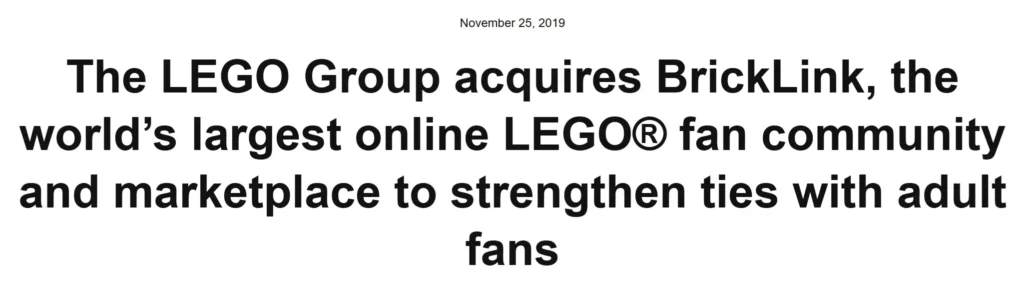
BrickLink hosts nearly 20,000 independent storefronts and boasts a truly global footprint. BAM operates primarily within the United States and Canada. LEGO has absolutely no reliance on physical BAM locations to keep the secondary brick economy healthy, making this theory a dead end.
Final conclusion
If LEGO were ever to officially address the Bricks & Minifigs situation, the most realistic timeline would have the company release a calculated statement roughly a week after the final court cases are officially settled. But even then, the odds of that happening are incredibly slim.
Between protecting a flawless global reputation, managing a massive financial disparity, and letting the legal system do the heavy lifting, Billund has every reason to keep its head down. For LEGO, silence isn’t just golden it’s standard corporate strategy.
Ultimately, don’t expect a corporate press release anytime soon; this is one story where the community will have to look to the courts, rather than the toy maker, for a final verdict.
FinBriCo is an independent fan site and is not affiliated with, authorized, or endorsed by The LEGO Group.