
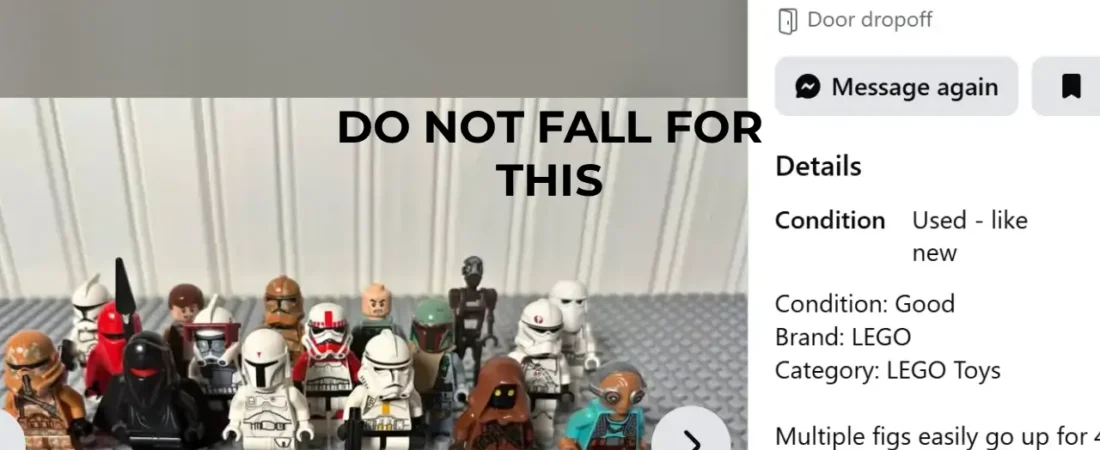
In recent weeks, you might have noticed an influx of unbelievably cheap LEGO minifigure lots popping up on Facebook Marketplace. If you’ve spotted them, you are definitely not alone, as a highly automated scam tears its way through the platform.
I had actually been seeing quite a few posts on Instagram talking about this exact topic, but I was still incredibly surprised when I ended up running into the trap firsthand while scouring Marketplace for retired LEGO sets. While I initially wasn’t going to write a whole piece about it, experiencing it myself made me realize just how rampant this operation has become across the U.S.
How the Trap is Sprung
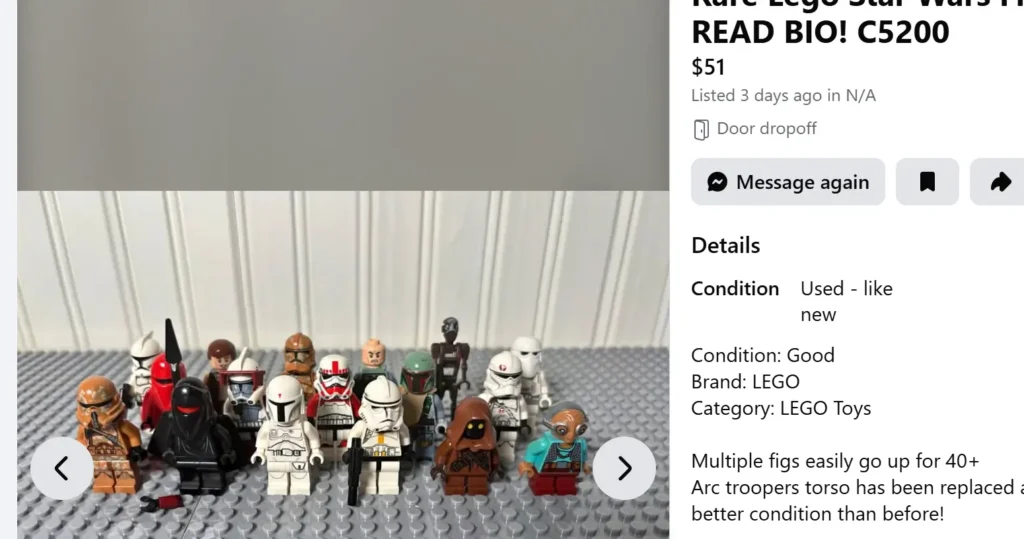
The strategy behind the scam is simple but incredibly effective, targeting a collector’s natural instinct to jump on a good deal. It usually starts with a listing featuring a highly desirable collection. They typically feature a bulk lot of ten or more LEGO Star Wars minifigures that are priced at an absolute fraction of its market value. Naturally, you think it’s a total steal, so you quickly send the seller a message to see if it’s still available. What should automatically throw you off, however, is that these listings are never marked as sold, remaining completely active even after sitting on the platform for days at an unbeatable price.
What happens next is entirely automated. The seller sends an instant reply stating that you just missed out and the lot has already been sold. But before you can even process the disappointment, the seller follows up by telling you not to worry, claiming they originally got their figures from an unknown website and pasting a hyperlink. Do not click that link under any circumstances, as these domains are engineered to harvest your data or infect your device with info-stealer malware.

How to Spot a Fake Deal
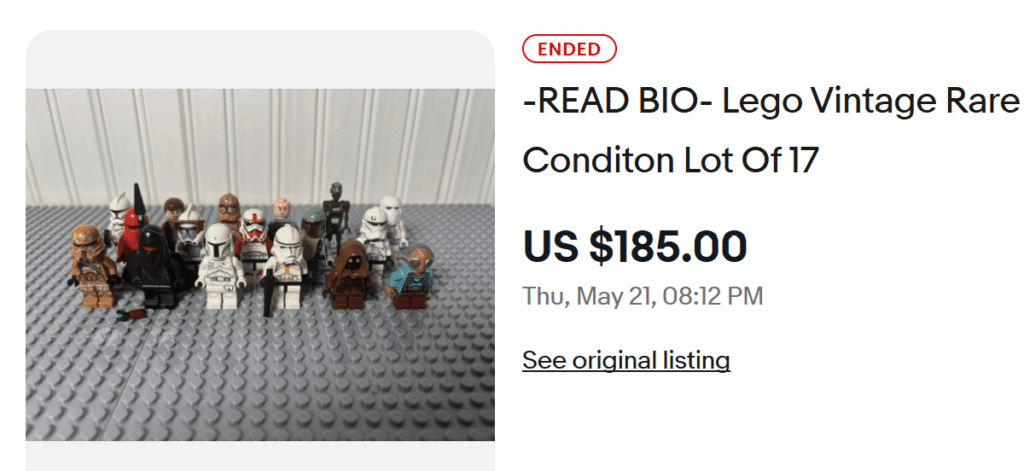
The entire goal of these fake listings is simply to bait you into clicking that private message link, and the listings themselves fall apart under the slightest scrutiny. In fact, if you reverse image search the photos used in these ads, you’ll quickly find they were stolen from legitimate sellers. In the specific case I ran into, the scammer lifted the Facebook image directly from an eBay listing that closed three weeks prior.
To put the deception into perspective, the original eBay seller was charging three times what the fake Facebook listing was asking, which perfectly aligns with the real market value versus too-good-to-be-true bait. After all, most collectors selling a massive lot from a single theme know exactly what their figures are worth on the secondary market, making these dirt-cheap listings an immediate red flag.
Ultimately, it serves as a stark reminder to always be entirely aware of your digital surroundings before interacting with unfamiliar sites. The golden rule here is simple: never click on hyperlinks sent in a private chat by someone you don’t know, especially when a deal seems just a little too perfect.
FinBriCo is an independent fan site and is not affiliated with, authorized, or endorsed by The LEGO Group.