
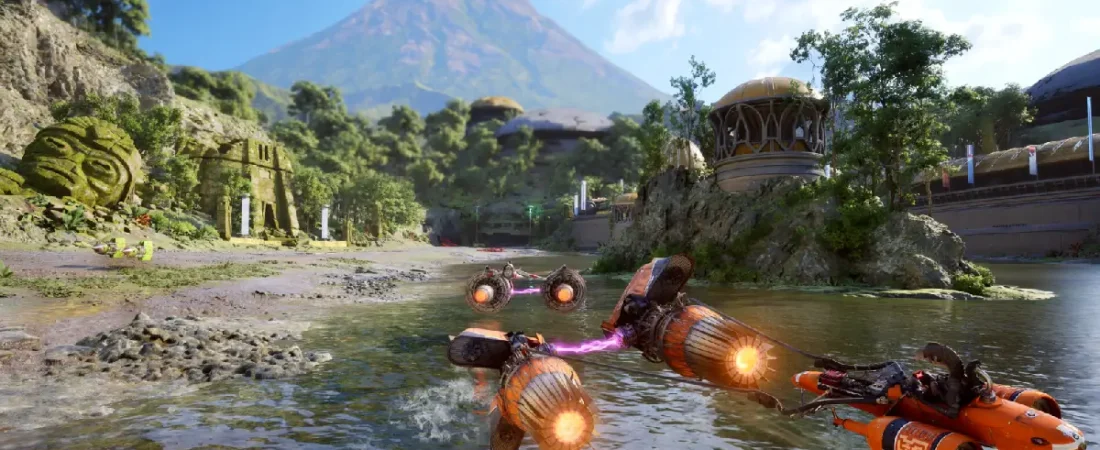
When The Game Awards 2026 unveiled its full list of nominees today, November 17th, one franchise stood out for its sheer breadth across the ballot. Star Wars secured four total nominations spanning three separate releases—STAR WARS: Galactic Racer, Star Wars: Zero Company, and Star Wars Droid Tycoon. While single blockbuster titles routinely rack up multiple nods in a given ceremony, having three distinct games from the same franchise recognized in the same year is an uncommon milestone that highlights just how dramatically the franchise’s gaming strategy has evolved.
Breaking Down All Three Nominated Titles
Leading the charge for the galaxy far, far away is STAR WARS: Galactic Racer, which earned two nominations: Best Sports/Racing Game and Best Audio Design. Developed by Fuse Games, the arcade racer launched on October 6 across PC, PlayStation 5, and Xbox Series X|S. It quickly resonated with both critics and players, surpassing 1.5 million players within its first month and becoming the highest-rated Star Wars game on Metacritic since 2003’s Knights of the Old Republic. In Best Sports/Racing Game, Galactic Racer faces EA Sports FC 27, Forza Horizon 6, Nintendo Switch Sports Resort, and Screamer. Its Best Audio Design nod, a testament to its roaring podracer and speeder engines, puts it in heavyweight company alongside Ace Combat 8: Wings of Theve, Control Resonant, Grand Theft Auto VI, and Resident Evil Requiem.
Star Wars: Zero Company claimed the franchise’s third nomination with a spot in Best Sim/Strategy Game. Developed by Bit Reactor and released on August 27 for PC, PS5, and Xbox Series X|S, the Clone Wars-era turn-based tactics title competes against Mewgenics, Planet Zoo 2, Pokémon Pokopia, and Slay the Spire 2. The Game Awards recognition caps off a remarkable 24-hour stretch for the project, coming just one day after composer Gordy Haab’s score for Zero Company earned a Grammy nomination.
Rounding out the trio is Star Wars Droid Tycoon, which secured a nomination in The Game Awards’ brand-new Best User Creation category. Built by creator FOAD using Unreal Editor for Fortnite and launched on May 1st, the experience lets players assemble and customize droids from Star Wars blueprints, manage their own workshop and factory, and deploy droids on missions. The new category spotlights standout community, made creations across major platforms, pitting Droid Tycoon against A Dream of Silence: Revamped (Baldur’s Gate 3), Create Aeronautics (Minecraft), NoPixel V (Grand Theft Auto Online), and TTK Testing (Roblox).
Why Three Nominations in One Year Matters
In the modern gaming landscape, getting even a single licensed title onto The Game Awards ballot is difficult, especially in a 2026 release calendar dominated by Grand Theft Auto VI, which leads all nominees with eight nods. Past Star Wars entries like Star Wars Jedi: Survivor and Star Wars Outlaws earned individual nominations in prior years, yet the franchise rarely fielded multiple contenders simultaneously. Achieving three separate nominees in a single cycle speaks directly to Lucasfilm Games’ deliberate shift away from relying exclusively on massive, multi-year single-player action-adventure tentpoles.
Across the entire history of The Game Awards, only three other franchises have ever placed three or more distinct games on the ballot in a single year: Mario in 2017 (Super Mario Odyssey, Mario Kart 8 Deluxe, Mario + Rabbids Kingdom Battle, and Super Mario Run), Call of Duty in 2020 (Warzone, Mobile, and Modern Warfare), and Final Fantasy in 2023 (Final Fantasy XVI, Final Fantasy XIV, Final Fantasy VII: Ever Crisis, and Final Fantasy VII Rebirth). Star Wars is not only the fourth franchise to join that list, but the first licensed entertainment property outside of native gaming IPs to pull it off. Even more notably, while Call of Duty and Final Fantasy relied partly on older live-service titles or unreleased “Most Anticipated” nods to reach their totals, all three Star Wars nominees are brand-new, playable experiences released within a six-month span in 2026.
Instead of betting the entire year on one sprawling open-world release, Lucasfilm Games empowered focused specialist studios and embraced user-generated ecosystems. Each of the three nominees serves a completely different audience, price point, and gameplay loop, from Zero Company‘s deliberate tactical combat and Galactic Racer‘s Burnout-inspired speed to Droid Tycoon‘s accessible sandbox progression inside Fortnite. Rather than cannibalizing one another, the three releases expanded what a Star Wars game can look like.