
A viral Reddit thread on the r/Battlefield6 subreddit titled “DICE, did you playtest this?” has ignited an uproar within the community over the current state of map design, game mode balance, and overall quality control in the new Battlefield 6 map. What was meant to be an exciting new update featuring aircraft carrier battles has instead turned into a frustrating exercise in spawn camping, leaving players questioning how such glaring issues slipped past development unnoticed.
The Problem: How Battlefield 6 Made Spawn Camping Easy
The Reddit post features a video showing players infiltrating the enemy aircraft carrier in the early game, well before the mode’s intended breach phase. Rather than fighting over active map objectives, players head straight for the enemy flight deck to spam mines on jet runways, plant spawn beacons on carrier towers, and destroy vehicles the second they spawn.
Battlefield 6 players after this happened: "DICE… did anyone actually playtest this?" 😳💀
— Battlefield Intel (@BattlefieldInte) August 19, 2026
🎥:Electrical_Basket424 #Battlefield6 pic.twitter.com/Vk5uSEGBIq
Pilots aren’t just dying to explosives, either; players are also getting picked off by snipers camping the flight deck before their aircraft can even move.
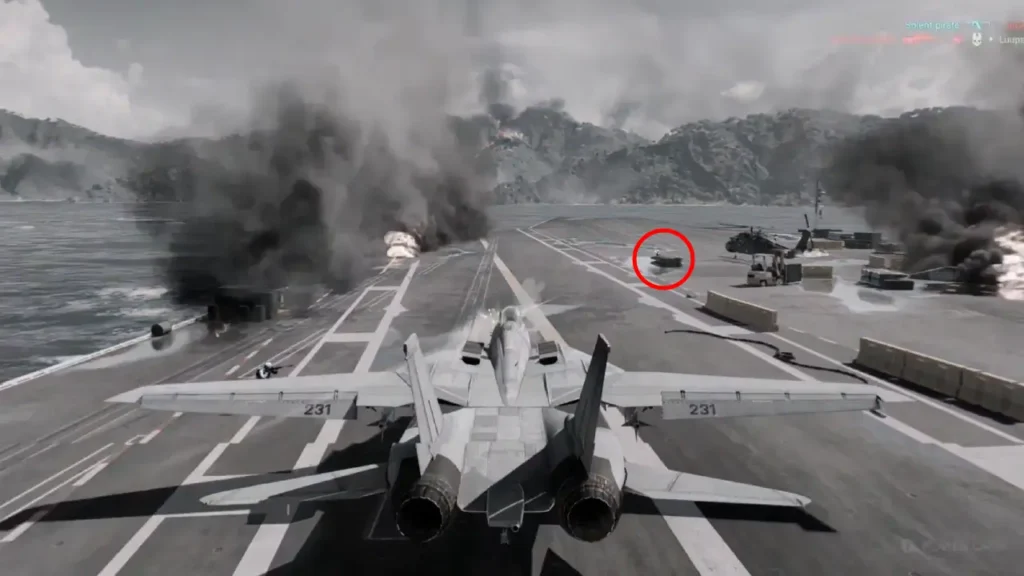
The issues stem from several compounding design choices that leave players entirely defenseless. Unlike past titles such as Battlefield 4, where jets spawned mid-air to prevent spawn trapping, Battlefield 6 places aircraft stationary on the runway deck. Players spawning into jets are instantly blown up by pre-placed mines or sticky explosives before they can even throttle up. Making matters worse, base defenses fail to offer any meaningful protection. While Battlefield 2 gave players manually controlled, high-powered C-RAM anti-air turrets to clear out base campers, BF6 relies on automated, underpowered turrets that leave players with no effective tools to reclaim their own flight line.
This problem is further compounded by broken out-of-bounds logic. The carrier mode was ostensibly designed around a breach phase, where the enemy ship should only be boardable after its defense health drops significantly. Instead, players discovered they can simply boat or fly over at the very start of the match, completely bypassing the intended progression. Combined with a total lack of HUD warnings or spotting mechanics for pre-placed explosives on the runway deck, every spawn on the carrier turns into an unavoidable coin toss.
The Root Cause: “85% QA Automation” vs. Actual Human Playtesting
The common thread throughout the Reddit discussion isn’t just frustration with game mechanics, it’s disbelief that such an obvious design oversight made it to live servers. A simple ten-minute playtest by human players would have immediately revealed that spawning stationary jets in an unprotected base leads to unplayable spawn trapping. This breakdown highlights the stark reality of EA’s recent QA restructuring, driven by aggressive workforce reductions and a massive shift toward automated testing.
As first reported by Insider Gaming, EA CEO Andrew Wilson revealed during an executive appearance at the iicon conference earlier this year that roughly 85% of Electronic Arts’ Quality Assurance work is now powered by machine learning algorithms and AI-driven workflows. Wilson described these automated tools as handling basic, repetitive tasks like booting up software and monitoring for crashes.
While EA executives maintain the narrative that AI serves as augmentation rather than replacing human staff, claiming QA workers now analyze automated datasets, the result on the player side reveals a major flaw in this philosophy. Machine learning algorithms can easily verify that a jet spawns on a carrier deck without causing a memory leak or crashing a server. However, automated scripts cannot simulate human frustration or predict player behavior, such as an entire squad rushing the enemy carrier early to plant mines on the runway. By replacing contextual human playtesting with automated efficiency metrics, EA has ensured that while technical builds might not crash, actual gameplay loops have a much higher chance of arriving fundamentally broken, a stark contrast to simply having dedicated QA professionals test out features before launch.