
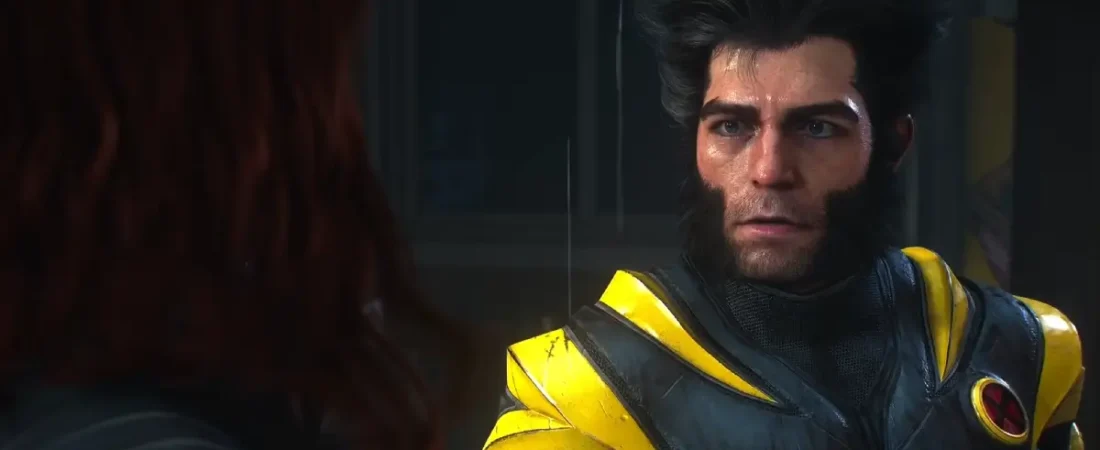
A recent social media exchange on X has some people raising their eyebrows. James Stevenson, Insomniac Games’ Director of Community and Marketing, has been actively liking and quote-tweeting positive posts about Marvel’s Wolverine. While that is standard procedure for any marketing director hyping up an upcoming release, one specific interaction yesterday crossed into questionable territory.
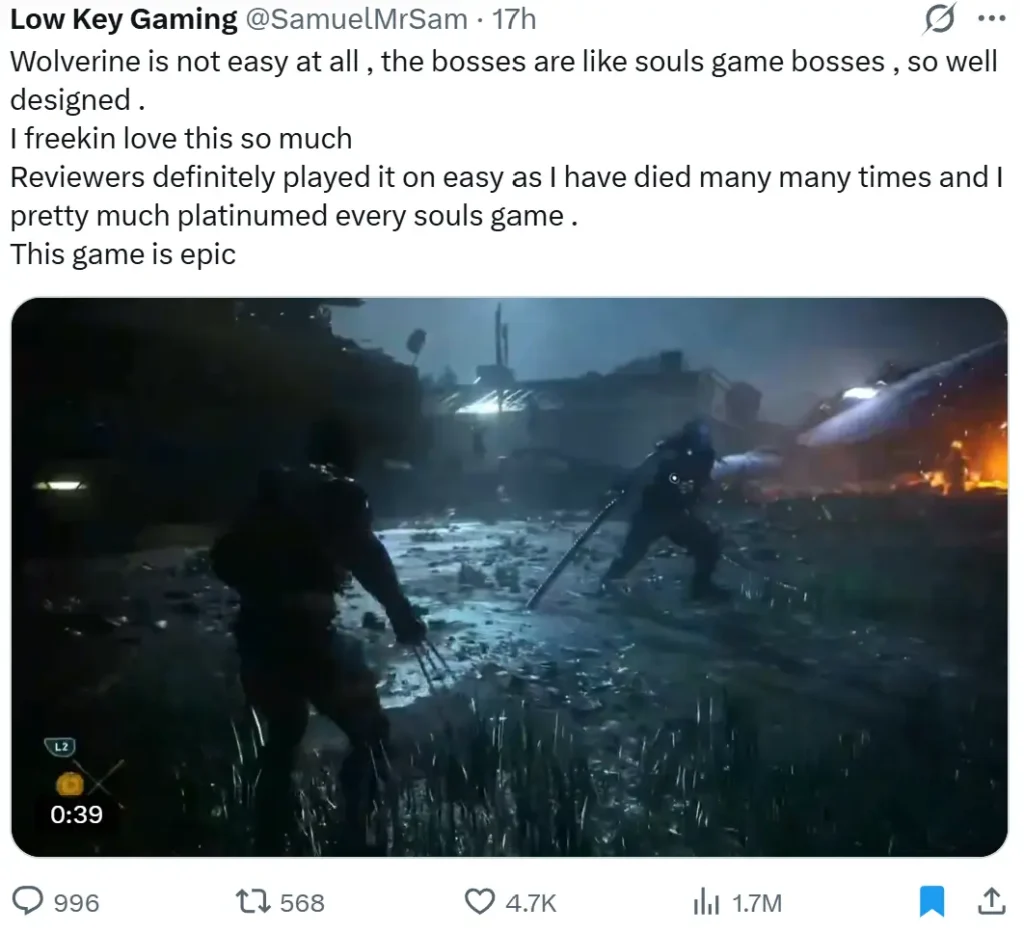
With Marvel’s Wolverine facing an uphill battle against critical backlash and lukewarm fan reception, some previews have felt suspiciously over-the-top. Gamers have already pointed out instances of extreme hyperbole, like content creator Low Key Gaming comparing the game’s boss fights to Dark Souls. While creators are free to share their genuine opinions, the line gets blurry when reviews are tied to commercial incentives.
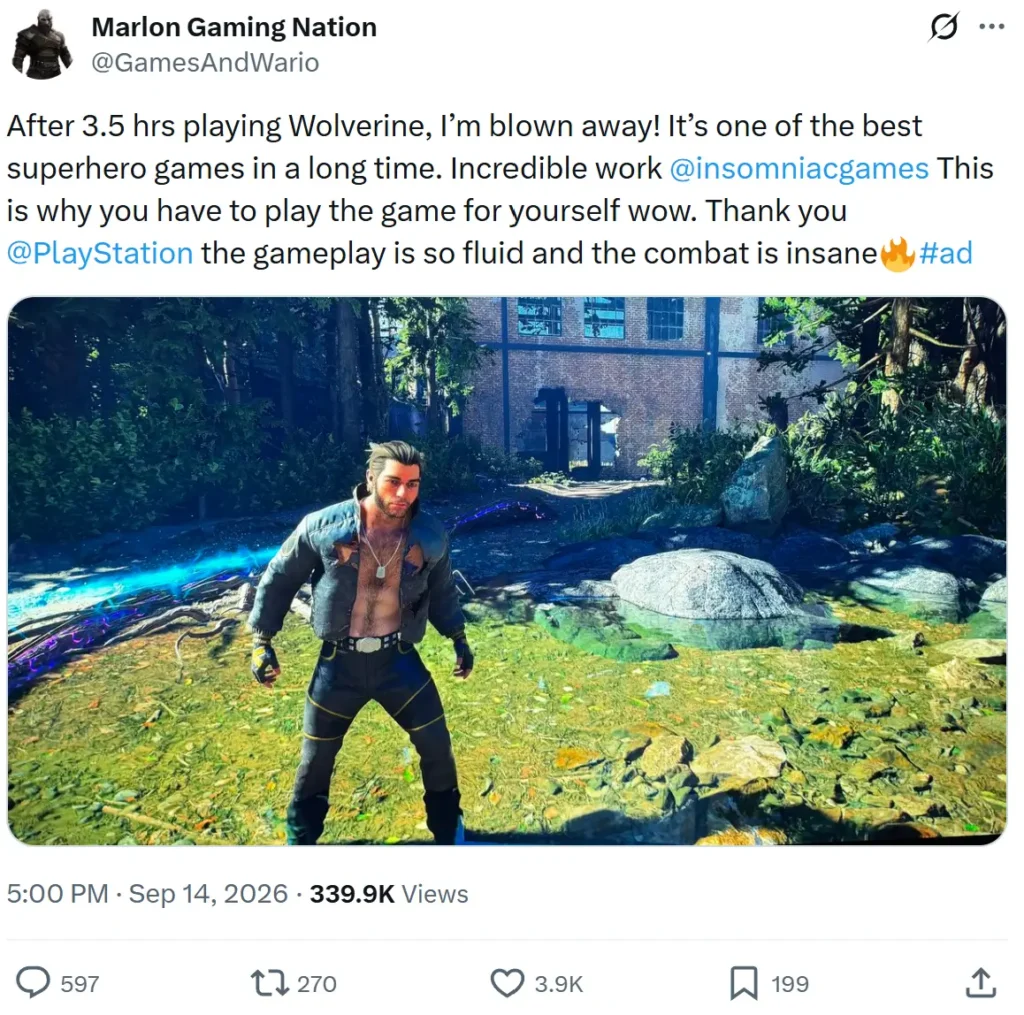
Enter the tweet that sparked the controversy. A semi-viral tweet from influencer Marlon Gaming Nation (@GamesAndWario) shared glowing impressions of the game, calling the combat fluid and labeling it “one of the best superhero games in a long time.” However, tucked at the end of the post was a mandatory #ad tag, confirming the preview was part of a deal with PlayStation.
The post started gaining traction after creator SmashJT called it out on X, writing: “When you put $300 million into marketing instead of qualified devs.“
The real optics issue hit when James Stevenson, Insomniac’s long-time Director of Community and Marketing and the primary public face of the studio on X (@JamesStevenson), quote-tweeted Marlon’s sponsored post with a simple caption: “Thank you for the kind words!“ Because Stevenson is a studio veteran who leads Insomniac’s overall marketing and community strategy rather than just a junior social media staffer, his decision to publicly validate this post made the post questionable.
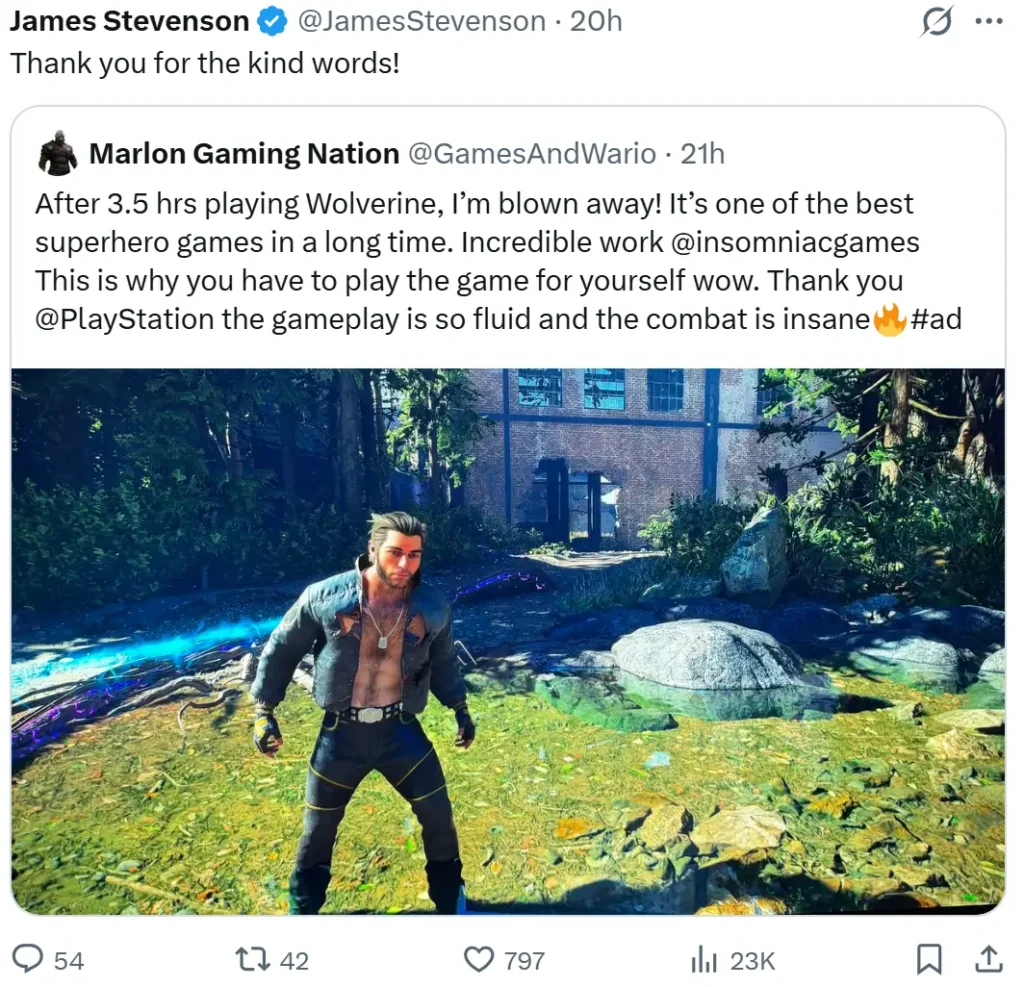
Underneath Stevenson’s post, the replies quickly filled with players calling out the #ad tag on the post he retweeted. Some labeled the preview disingenuous by mentioning Marlon was getting paid for the post. Others questioned whether Stevenson missed the #ad tag entirely at the end of the tweet.
Paid Promo vs. Real Hype: An Awkward Look
Sponsored preview campaigns are standard practice in the AAA gaming industry, studios routinely pay creators or provide early access to build reach. But how studio leads publicly engage with those posts carries some weight. By framing a contracted sponsorship as personal “kind words,” Stevenson created a sketchy illusion of organic enthusiasm.
Whether the creator received direct cash or simply an early review code requiring the #ad disclosure, the FTC guidelines were followed on their end. Stevenson’s response, however, completely glossed over the commercial transaction, presenting paid PR work as an organic fan endorsement.
Pushing Paid Positivity Amid Community Skepticism
What makes this move particularly bad for optics is the overall climate surrounding the title. Marvel’s Wolverine has already been fighting a negative narrative, drawing heavy skepticism over early gameplay looks, design choices, and the difficulty of the game.
When a project is taking heat, using biased influencer praise becomes a red flag. It makes the post by the original poster and Stevenson seem inorganic. Boosting contracted positivity during a wave of legitimate community critique looks to many like an attempt to drown out real player frustration. People start to notice when official studio members feeds selectively highlight paid coverage to counter negative buzz. At the end of the day, pretending a paid advertisement is real fan hype when the game is already taking heat just makes players trust the studio even less.