
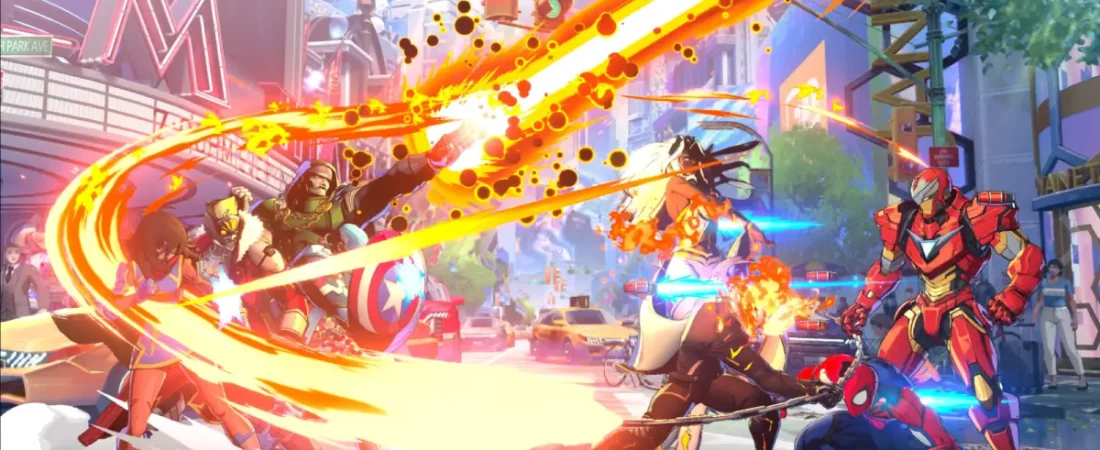
Despite the arrival of its first major Season 1 content drop, headlined by the debut of DLC fighter Phoenix Cyclops and a slate of performance stability fixes, Arc System Works and Sony’s MARVEL Tōkon: Fighting Souls has failed to mount a sustained comeback.
On November 2, 2026, the release of the Phoenix Cyclops update provided a brief shot in the arm for the struggling tag-team fighter. On Steam, peak concurrent player counts jumped from a dismal 279 players on November 1 to 1,514 players on update day, representing a 442.7% single-day surge in active users. However, the spike proved to be short-lived.
Rapid Retention Collapse Signals Deep Player Apathy
By November 5, just 72 hours after the update dropped, concurrent player numbers collapsed by 63.2%, peaking at just 558 active players on Steam. This rapid drop-off brings the daily player count perilously close to pre-update levels which sat at 200-300 players, and remains a microscopic fraction of the game’s all-time launch peak of 24,498 concurrent players in early August.
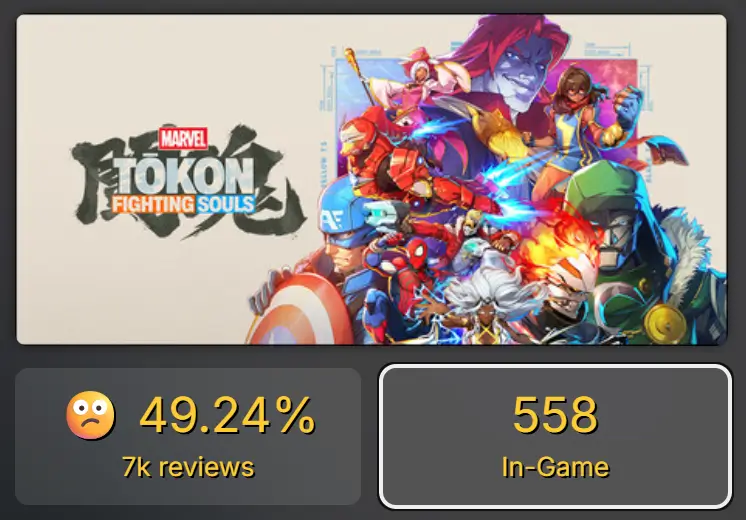
While the patch addressed online matchmaking stability, rating restrictions, and assist cooldowns, the immediate decay indicates that technical fixes alone are not enough to restore confidence in a title panned for performance issues since launch.
The 3-Month Update Cadence Poses an Existential Threat
What makes this steep drop-off particularly alarming for the game’s long-term viability is its ongoing post-launch content cadence. MARVEL Tōkon: Fighting Souls relies on a Year 1 DLC model that delivers major updates roughly every three months, with each drop featuring only a single new character.
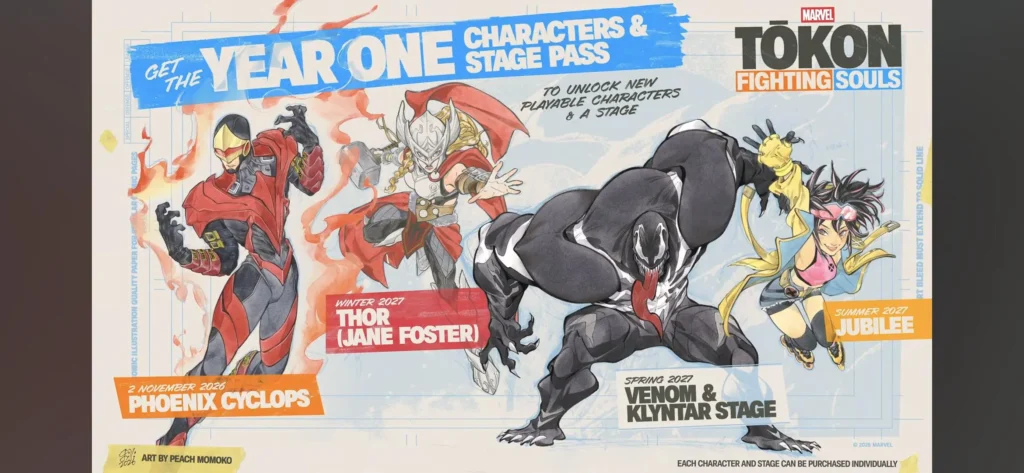
With the next scheduled character drop set for Winter 2027 (spanning anywhere from December 21, 2026 to March 21, 2027), the title faces a critical content drought. If a flagship character like Phoenix Cyclops accompanied by major gameplay adjustments cannot retain players past a three-day window, MARVEL Tōkon risks complete player base depletion long before its next update arrives.